The CLC2023 Programme
The CLC 2023 Programme
| 8.00 - 16.30 | Conference Registration and Assistance Atrium of the Grand Hyatt Conference Centre |
|||||||
| Bar Leaders and CEOs Forum (Invitation only) | CLA Council Meeting for Council members only | AGM for CLA members Grand Ballroom |
In partnership with
 (open to all young lawyers under 40) |
|||||
| 10.00 - 11 .00 | Session 1 | 9.00 - 9.20 | Introduction and President's Welcome | |||||
| 11.00 - 11.15 | Tea/coffee break | 9.20 - 10.00 | Discomfort in Growth: Law and Life after Lockdowns | |||||
| 11.15 - 12.00 | Session 2 | 10.00 - 10.30 | Tea/coffee break | |||||
| 10.30 - 12.00 | Ethics in Action Ethics in Action Ethics is integrity; calamity is the test of integrity |
|||||||
| 12.00 - 12.40 | Navigating the career that I want in Law | |||||||
| 13.00 - 14.00 | Lunch Break | |||||||
| 14.00 - 15.00 | CLA Council Meeting for Council members only (hybrid) |
14.00 - 15.00 | Thoughts from Bar Leaders | |||||
| 15.00 - 15.30 | Tea / Coffee Break | |||||||
| 15.30 - 16.30 | AGM for CLA members only | 15.30 - 17.00 | Speed mentoring | |||||
| 18.00 | Welcome reception and buffet dinner at the Taj Rooftop Terrace for all conference delegates (young lawyers invited from 17.30 for a 30-minute pre reception networking opportunity with selected guests and CLA Council members). Those accompanying persons who have purchased an accompanying person ticket are also welcome to attend. |
|||||||
| Registration | |||||
| 8.30 - 10.30 | Opening Ceremony and Keynote Address Celebrating 20 years of the Latimer House Principles on the three branches of Government: Accountable Government for Commonwealth Nations In 2003, the Commonwealth Heads of Government in Abuja, Nigeria, bound member countries to the continuous pursuit of the Commonwealth values of democracy and the rule of law, good governance, and human rights. The development of the Latimer House Principles was spearheaded by four inspired Commonwealth partner organisations - the Commonwealth Lawyers Association, the Commonwealth Legal Education Association, the Commonwealth Magistrates and Judges Association and the Commonwealth Parliamentary Association. 20 years on, the Commonwealth Secretary-General, The Rt Hon Patricia Scotland, KC, reflects on this pivotal moment for the Commonwealth and its accredited organisations and urges recommitment of all to the values of the Commonwealth enshrined in the Latimer House Principles. In her remarks, the Secretary-General recalls that accountable governance is the bedrock of democracy and development. 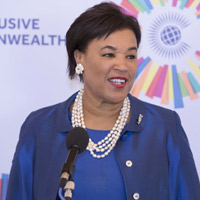
The Rt Hon Patricia Scotland KC |
||||
| 10.30 - 11.00 | Tea / Coffee Break | ||||
| Stream A | Stream B | Stream C | Stream D | Stream E | |
| 11.00 – 12:15 | A1 Financial services best practice |
B1 Democracy and the COVID aftermath - Abuse of emergency powers |
C1 Judicial education and the use of technology in the courtroom |
D1 Can lawyers and the law protect the right to a healthy environment? |
E1 Corporate governance - Current developments in commercial practice |
| “Not honesty alone, but the punctilio of an honor the most sensitive, is then the standard of behavior … (to keep) fiduciaries at a level higher than that trodden by the crowd.” (Justice Benjamin Cardozo – US Supreme Court). What is the role of lawyers in maintaining the highest standards within the wide range of financial services in liberalised regimes throughout the Commonwealth? The panel will focus on meeting the challenges of massively increased international fraud and terrorism, which require higher enforcement standards, without affecting free commercial consistency and availability of credit. | When disease is on the streets, extraordinary measures are resorted to and deemed necessary. Governments around the world have confronted the Covid pandemic armed with new and extended powers. A total of 32 countries have used far -reaching emergency powers that have invariably impinged on basic human rights. Too many of these powers are also neither time proscribed nor limited. Has this all gone too far? To what extent is the nanny state a harbinger of oppression? | As the legal fraternity debates introducing AI into the judiciary, judicial officers are faced with adapting to technology in the courtrooms. Digital training modules in judicial education curricula are imperative, but so are continuing digital education programmes and training for existing members of the judiciary. But does technology promote the cause of judicial efficiency, or detract from it? Is technology a barrier or a highway for access to justice and the principle of open justice? Are the ease, convenience, and efficiency of technology offset by its pitfalls, such as anonymity, data breaches and threats to digital security? | The right to a clean, healthy and sustainable environment is recognized by the United Nations Human Rights Council and by more than 150 national jurisdictions as an important human right. What are the procedural and substantive implications of this right, and how can lawyers use their particular skills and knowledge to give it life and meaning? | In a time of extraordinary changes to the administration of corporations, how decisions are taken, how due diligence is performed, and what checks and balances are discarded to enable trade and commerce to continue are live legal issues. How have legislatures and courts held executives and board members accountable? Are developments consistent across the jurisdictions? This session will explain and analyse significant developments relevant to all commercial lawyers' practices. | |
| 12.15 – 13:15 | Lunch Break | ||||
| CLA Australasia Hub networking lunch in the Chula Restaurant where all members of the CLA Australasia Hub or those with an interest in the projects and aspirations of the Hub are invited to join the Vice President for the Hub for a conference lunch. Open to all delegates |
|||||
| 13:15 - 14:45 | A2 Employment law – A new age of employer responsibility after COVID |
B2 Slavery and its economic and legal aftermath – What have we learned? |
C2 Judicial appointments – Developments and regressions |
D2 Sports law post COVID – Lawyers’ responsibilities to athletes, organisers, sponsors, and governments |
E2 Trade laws - Using international sanctions to further political ends |
| What is employer responsibility during and after COVID, in the face of permanent developments such as remote working? Issues include the legal impact of new technologies in the workplace; effects on intellectual property in the employer-employee relationship; tax issues; health and safety issues; the impact of new forms of work organization and employment relations on corporate law; the role of criminal law in protecting workers’ rights; compliance and investigation; data protection; corporate social responsibility (CSR); and the protection of human rights in the neo-technological workplace. | The slave trade lasted over 300 years. 12 million men, women, and children were taken by violence from their homes in Africa alone. World economies and populations have, over the centuries, been irreversibly altered by the slave trade. It has not ended. The evil of bonded labour still enslaves 12 million people, mostly in Asia. Do we keep looking backwards in an endeavour to achieve the wholeness and the healing that the world perceives it still needs? Do we need to move forward while learning from these historic abuses? | The changing face of the justice system brings with it old challenges in new packaging. Judicial appointments continue to be a balancing act on the tightrope of executive and legislative interventions, independence of the judiciary, the need to ensure adequacy of representation across social and economic backgrounds, individual ideology of appointees, and merit. In an increasingly litigious society, how do Commonwealth countries approach this challenge? What unique and new obstacles do judicial appointments bring up in different jurisdictions? | COVID-related uncertainties have demanded that lawyers find innovative approaches to issues concerning stake holders in the sports industry. From assessing repercussions of force majeure events on organisers; to challenging vaccine mandates for athletes; from sponsors’ compensation for loss of returns in addition to lost media exposure; to adherence to Government-sanctioned risk-mitigation protocols, several clauses now must be added to contracts, specifically addressing COVID. This panel addresses the considerably widened scope of a lawyer’s fundamental responsibility towards protecting clients’ interests. | In light of developments arising from Russia's invasion of Ukraine, how should lawyers advise clients who are adversely affected by political decisions to impose economic sanctions on Russian nationals and legal entities? How effective are international trade agreements and organisations in addressing sanctions imposed upon lawyers' clients by foreign governments acting for political reasons? This session is sponsored by the Law Society of Hong Kong  |
|
| 14:45 – 15:15 | Tea / Coffee Break | ||||
| 15:15 – 16:45 | A3 Corruption and transparency in government contracting – Any sign of the end of palm greasing? |
B3 The Colonial Hangover - the lasting impact of colonialism on the Common Law and beyond |
C3 Regulation of the profession and COVID emergency measures – Pitfalls and lessons |
D3 Indigenous land rights this Century – The end of terra nullius? |
E3 The impact of legal drafting on the protection of rights and the rule of law |
| Every year, billions of pounds of public money are lost to fraud and corruption, disappearing into the pockets of government officials. Transparency is widely promoted as an essential condition for good governance, and as an effective tool against public sector corruption. How does legislation help control corruption in government contracts within the Commonwealth? Where legislation falls short, can organisations such as Transparency International effectively carry the torch of integrity and honesty as they work to promote transparency, accountability and integrity at all levels and across all sectors of society? Are the courts an effective adjunct to these efforts? Has use of continuous mandamus in India succeeded as a judicial approach to control of corruption and is it an example to follow elsewhere? | The Common Law has been the only global rival to civilian systems based on Roman law. It was carried by the Colonial powers and defines legal systems throughout the Commonwealth and derives mostly from the courts of what, for most jurisdictions in the Commonwealth, were former colonies. The final arbiter of what was right and wrong was the Judicial Committee of the Privy Council in London. The major incentive for the formation of the Judicial Committee was to oversee the community of Common Law based legal systems throughout the Commonwealth. However, the overseas jurisdiction of the Judicial Committee has declined since the 1940s as former dominions and colonies have established their own apex courts. The remnants of this jurisdiction of the Judicial Committee are under scrutiny. Has the Judicial Committee passed its time? Should the mature Commonwealth be creating something on a similar base to the ECJ in Europe, or, should there be a free for all, without any form of central control and abandon all colonial hangovers. |
The imposition of COVID restrictions resulted in, among other things, loss of opportunities and access to work for lawyers. Health emergencies among lawyers and their dependants led to rising responsibilities and increased financial burdens. The after-effects of COVID infections left new, unseen health risks to be tackled. Are existing welfare schemes by law firms and bar associations adequate to address the concerns of members of the bar? Has remote working highlighted new issues in the regulation of the profession? How have bar associations risen (or not) to the challenge of addressing new challenges posed by the pandemic? | As lawyers, we have a responsibility to foster public confidence in the rule of law and recognize when it is threatened by encroachments on its fundamental concepts, including the equality of every person before the law. We are called upon to educate ourselves about our national histories and to develop an understanding of how our legal systems have dispossessed and disempowered indigenous peoples. Only then can we learn to use those same legal systems to recognize and protect the rights of all, including those who have occupied for millennia, the territories that were once called “no one’s land.” | Clarity in legal drafting can contribute more than ever to problem prevention and the protection of rights. If ignorance of the law is no excuse, drafters of laws and legal instruments carry a significant burden, to make their meanings clear. Are accuracy and enforceability incompatible with clarity? What examples of drafting best practice have been developed throughout the Commonwealth? | |
| 17:00 – 18:00 | The CLA Human Rights and Rule of Law Committee invite all interested delegates to join them for an informal “Sunset Meet” in the Salao 1, Ground floor at the Hyatt. David Greene and Sophie Stanbrook, the co-conveners, are keen to meet delegates and share the work and aspirations of this recently convened Committee. | ||||

































| 7.30 – 8.30 | LexisNexis Rule of Law Foundation/Commonwealth Lawyers Association Complimentary Breakfast and Seminar: Advancing the Rule of Law, with speakers from across the Commonwealth Ballroom 3 Grand Hyatt Open to all delegates |
||||
| 08:45 – 10:15 | Keynote Address: Living Lands– How should lawyers answer the call? The Commonwealth Heads of Government Meeting in Kigali recognised the importance of climate to the member states of the Commonwealth. It produced and ratified the Commonwealth Call to Action on Living Lands This was complemented by the Declaration on Sustainable Urbanisation. The CALL charter inter alia “mandates” an implementation plan. There is little doubt that the law will have a significant role to play in any implementation plan. Lawyers advising corporations, NGOs and governments will need to inform themselves about the implications of these important documents. New rights of action against those who transgress will be developed – and lawyers advising the important players in climate change need to keep abreast of these inevitable changes. Leaders will outline their views as to what the development pathway will be. |
||||
| 10:15- 10:45 | Tea / Coffee Break | ||||
| Stream A | Stream B | Stream C | Stream D | Stream E | |
| 10:45 – 12:15 | A4 Lawyer-client privilege - Can it survive a war on money laundering and terrorist financing? |
B4 Freedom of movement in a post COVID world – Are internal passports on the rise? |
C4 Lawyers’ mental health - the effects of working from home, interviewing via Zoom, and advocacy before electronic tribunals. |
D4 Human reproductive rights : Can the law keep pace with science? |
E4 Freedom of expression and the right to peaceful protest |
| To combat money laundering and terrorist financing, many countries have entered into international agreements requiring legislated obligations to report suspicious transactions to specified authorities. Resulting conflicts with long-established privacy rights and legal professional privilege have led to controversy and litigation in several Commonwealth countries. Prominent practitioners and experts from different Commonwealth countries will examine the implications of these developments. | “Of all the specific liberties which may come into mind when we hear the word ‘freedom’,” philosopher Hannah Arendt once wrote, “the freedom of movement is historically the oldest and also the most elementary.” The era of free movement in the 20th century also coincided with an explosion in low-cost air travel. Since the start of the pandemic, many governments have used their emergency powers to restrict internal and international travel in different ways and degrees. If freedom of movement is undeniably a universal human right, how can it be reconciled with the demand for safety? | In the midst of the COVID pandemic, another pandemic raged. Social isolation and anxiety challenged everyone’s mental health and lawyers’ in particular. Uncertainty and stagnancy debilitated many in the profession, as the line between home and work was blurred. Advocates appearing before digital screens were disconnected from the reality of the courtroom. Many others lost opportunities for growth and sustenance. As we trickle back to normalcy with the reopening of courts and offices, we may still need to address how to ease the transition for some members of the bar and how to rehabilitate others. | Millions of couples suffering from infertility have been given hope through Assisted Reproductive Technology-one of the most widely adopted and successful medical technologies of the last century. But the law has not kept pace with science. Pre-implantation genetic screening; exploitation of gamete donors; anonymity rights for donors and for offspring; and the emerging industry of international surrogacy all present legal and ethical issues. Are lawyers and the law up to the challenge? | All legal systems recognise that freedom of expression is not unlimited but is curtailed to varying extents by the law. Expression that incites unlawful activities, vilifies or encourages vilification, or defames will be constrained. How best to preserve freedom of expression whilst protecting the rights of others? How have Commonwealth jurisdictions curtailed the right to peaceful protest during and beyond the COVID pandemic and what is the role and capacity of the courts to protect that right? What lessons can be learned? | |
| 12:15 – 13:15 | Lunch Break | ||||
| CLA Americas Hub networking lunch in the Chula Restaurant where all members of the CLA Americas Hub or those with an interest in the projects and aspirations of the Hub are invited to join the Vice President for the Hub for a conference lunch. Open to all delegates. |
|||||
| 13:15 - 14:45 | A5 Class actions – A lawyers’ picnic or true access to justice? |
B5 Protecting freedom of the media – what more can we do? |
C5 Post-pandemic legal practice – A brave new digital world? |
D5 Child brides and legalized marital rape - A Commonwealth tragedy |
E5 Freedom of religion and the right to faith-based discrimination in education and employment |
| Class actions have been described as an “island of collectivism in a sea of individualised dispute resolution.” Class actions are common, if controversial, in the USA and have long been an important tool for ordinary individuals seeking to protect their rights – the David slingshot against the might of Goliath. In Australia and Canada too, class actions have become an established and important part of the legal landscape. Elsewhere in the Commonwealth they are variably regulated. England and Wales have only the much more restrictive Group Litigation Orders. In India, class actions are called “Public Interest Litigation” and are strictly regulated. Are class actions the way of the future against powerful global corporations? How should they be regulated to prevent abuse and oppression? | Free and independent media are a cornerstone of democratic societies. Among the organisations created to monitor and promote press freedom and independence, the Organisation of Cooperation and Security in Europe (OSCE) has a unique mandate to protect and promote media freedom in 57 states who have signed on to its charter. The UK’s BBC Media Action has supported public interest media since 1999. The Council of Europe’s work on freedom of expression focuses on four major axes – media policy and regulation, the impact of digital technologies on freedom of expression, media and information literacy, and the safety of journalists. In what other ways, in our increasingly virtual world, should we seek to preserve free speech and a free press? | The pandemic pushed even the luddites among the bar and bench to go digital. Investing in state-of-the art video and audio technology, and high-speed internet was imperative. Lawyers used legal management systems and digitized their physical libraries and filing systems. If we carry forward the digital gains of the pandemic, will state-of-the-art digital tools replace the need for a physical office? With the advent of Web 3.0 and AI, the courts of the future could very well be virtual. Holographic appearances may be the norm, and e-filing the rule. Could AI supplant human intervention in routine legal tasks? Do remote appearances and meetings benefit everyone? How will billing practices change? What are the pros and cons, the overheads and returns of a post-pandemic legal practice? And how can we keep adapting while preserving low entry barriers for prospective practitioners? | Child marriage robs children of their innocence, their education, their hopes and dreams, and even their lives. Almost 60% of child marriages worldwide occur in the Commonwealth. In 18 Commonwealth countries it is legal for a husband to rape his wife. In 10 of these countries child marriage is also lawful, legalising the rape of children. This is a Commonwealth problem, and one that the legal profession must confront. The CLA has produced a pan-Commonwealth overview of the role of the law in eliminating child marriage. How will the profession respond in countries where change is still needed, and where enforcement is lax? | Religious freedom laws should ensure the right to practice one’s faith without interference from government - but do they and should they allow faith-based discrimination in education, employment, accommodation or other services? How do jurisdictions deal with the rights of those persons who would be discriminated against by religious institutions on the basis of gender identity, sexual orientation or some other characteristic? Does government funding of services provided by religious institutions affect freedom of religion laws? | |
| 14:45 – 15:15 | Tea / Coffee Break | ||||
| 15:15 – 16:45 | A6 Artificial intelligence, competition laws, blockchain, emerging technologies, e-commerce – What can we learn from each other? |
B6 LGBTIQ+ rights across the Commonwealth – What role has the law played? |
C6 Adversarial systems – Do they have a future post COVID? |
D6 Online media giants may be “too big to care”-But can the law make them care? |
E6 Trans-border property disputes in family law |
| Block chain, crypto currency, de-centralised finance, non-fungible tokens, the metaverse, and emerging technologies are breaking new ground and taking e-commerce to a new level. What are the implications for law makers, regulators and law firms within the sphere of the rule of law? How will Artificial Intelligence remain unbiased and not violate privacy rights? Will de-centralisation lead to healthy competition or to more centralised monopolies? | How do we tackle “that horrible, horrible legacy that the British left around the world”? How effective is the Commonwealth at tackling this issue head-on, what impact will the next Chair-in-Office of the Commonwealth have, and can more be done to achieve positive change? It is apparent that the law has not been used consistently in the interests of those promulgating and seeking to advance the rights of LGBTIQ+. How does the Rule of Law help in states where the majority abhors the expansion of LGBTIQ+ rights? How wide does the scope of the Rule of Law have to be? Global, of course, but how do we achieve that? | Digital courtrooms and the limitations of technology require advocates to change their style of advocacy if they are to bridge the digital gap and connect with clients and judges alike. Long-winded, detailed arguments and verbose pleadings and submissions have no place in the click-of-a-button world. How have lawyers adapted oral arguments and written pleadings to suit the digital justice system? Are new rules of procedure required or are existing regulations sufficient to ensure effective legal assistance in courtrooms? What does the future of advocacy look like in a post-pandemic world? | Are national laws capable of placing social media giants under a new era of oversight just like health care, transportation and banking industries? Can these companies be forced to police their platforms more aggressively? Will Europe’s legislative effort to limit the online collection and sharing of personal data serve as a model for the rest of the world? Can restrictive legislation foster competition from emerging rivals, or will the tech giants use the courts to squelch attempts to limit their power? | What international legal arrangements ensure that litigants use the appropriate forum to resolve trans-border matrimonial and family property disputes? How can clients whose erstwhile spouses issue process outside the jurisdiction get a fair hearing, and what steps can the non-resident litigant's lawyer take to achieve this? What are the chances of alternative dispute resolution processes being employed to resolve the issues, and how are their outcomes enforced? | |
| 17:00 – 18:00 | The CLA Environmental and Climate Justice Committee, invites all interested delegates to join them for an informal “Sunset Meet” in the Salao 1, Ground floor at the Hyatt. Fiona Ey, the co-convener, is keen to meet delegates and share the work and aspirations of this recently convened Committee. | ||||
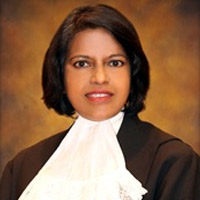





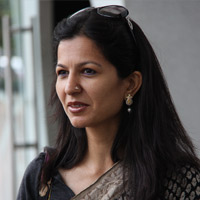




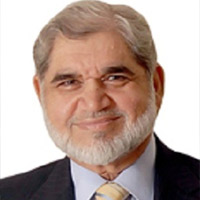





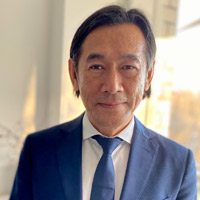
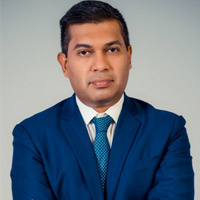




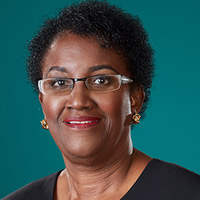




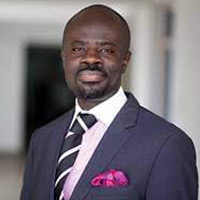
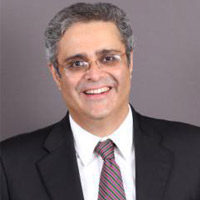





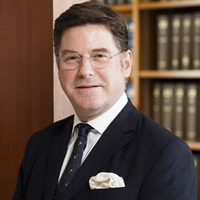




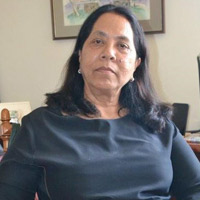
| 7.30 – 8.30 |
In partnership with
Ballroom 3 Grand Hyatt Light breakfast refreshments will be provided Open to all delegates |
||||
| 08:45 – 10:15 | Keynote Address: Safeguarding and strengthening the independence of judiciary “… it is the judiciary which is entrusted with the task of keeping every organ of the State within the limits of the law and thereby making the rule of law meaningful and effective “(P.N Bhagwati. J in S.P Gupta v. Union of India 1981 Supp SCC 87, para 27) An independent judiciary is the ultimate shield that preserves and protects the rule of law in all modern democratic societies. It is pivotal to the separation of powers of government, as a check and balance on the exercise of unlimited powers. In discharging this critical function, judges are expected to act impartially and fearlessly, immune from influence or interference. Independence and impartiality inspire public confidence in the judiciary and promote the rule of law. An independent judiciary is the bane of authoritarians and despots. Attempts to undermine judicial independence are on the rise, whether by branding judges as “enemies of the people” or spuriously accusing them of intruding into the domain of the executive or legislature. This is often driven by political gain, private ambition, or unabashed opportunism. It is an onslaught that erodes confidence in the independence of the judiciary and threatens the rule of law. The Commonwealth (Latimer House) Principles declare that “An independent, impartial, honest and competent judiciary is integral to upholding the rule of law, engendering public confidence and dispensing justice.” As Commonwealth lawyers we must unequivocally reaffirm the importance of the independence of the judiciary, remain alive to insidious challenges, and be vigilant in safeguarding and strengthening the judiciary. 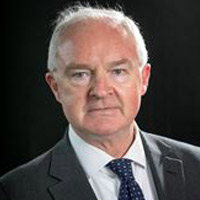
Chair : The R Hon Sir Morgan PC KC 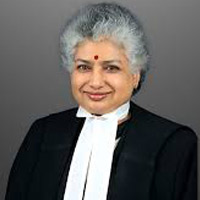
The Hon’ble Mrs Justice B V Nagarathna 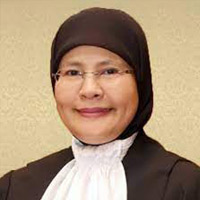
The Right Honourable Tun Tengku Maimun Binti Tuan Mat |
||||
| 10:15- 10:45 | Tea / Coffee Break | ||||
| Stream A | Stream B | Stream C | Stream D | Stream E | |
| 10:45 – 12:15 | A7 What are the key features of successful international arbitration of commercial and insurance disputes? Resolving insurance disputes internationally – who’d want to litigate? |
B7 Abolishing the death penalty in the Commonwealth - How successful have we been? |
C7 Professional indemnity insurance in litigious times |
D7 Model litigant guidelines – do governments take notice, and what if they don’t? |
E7 The Decriminalisation of poverty in the Commonwealth |
| What are the pros and cons of institutional arbitration, and what are practitioner’s responsibility in advising clients in both drafting documents, and after a dispute arises? Is English law always best, and what are the alternatives? How have Commonwealth countries’ courts developed curial court expertise so as to attract arbitrations seated there?” |
The death penalty is a cruel and inhuman punishment that violates basic human rights. It was abolished in the UK more than 50 years ago, but within the Commonwealth a disproportionate number of countries continue to impose the death penalty and some Commonwealth countries have vocally defended its retention. The universal abolition of the death penalty has long been an objective of the Commonwealth Lawyers Association. What more can be done by the Commonwealth to influence nations within and outside the Commonwealth to join the community of abolitionist states? | The increasingly litigious society we live in today has resulted in greater exposure to liability for lawyers and law firms. How can we limit this exposure without creating entry barriers into the profession? Is the affordability and adequacy of professional indemnity insurance a hindrance to the independence of the bar? How has the jurisprudence on professional negligence claims against lawyers developed in different commonwealth jurisdictions? How can lawyers mitigate risk while maintaining professional integrity? | There can be an imbalance of power between government agencies and other parties to proceedings. Litigants need to be confident that government parties to actions are on equal footing. Model litigant rules seek to impose a basic duty of fairness on government as a party to litigation. In today's practice how can private litigants ensure that government bodies abide by these guidelines? Are they enforceable? Are complaints dealt with transparently? What sanctions can be imposed? | A panel discussion to raise awareness across the Commonwealth of the multiple needs for the decriminalisation of poverty programme, in support of SDG 16, Peace, Justice and Strong Institutions, drawing on examples of best practice. Action for the decriminalization of poverty is not simply a question for tidying up national penal codes across the Commonwealth, repealing colonial-era and legacy laws to remove antiquated formulations of vagrancy and public nuisance which have been used by federal, state, municipal and police authorities to target or control marginalised communities or those in extreme poverty. These colonial-era and legacy laws around petty offences certainly exist and are attracting important scrutiny. The institutions which administer and underpin the implementation of legislation also require evaluation and assessment, to ensure that enforcement does not violate constitutional rights, or that institutional bias, practices of incarceration and bail do not fall disproportionately upon the most vulnerable communities, further jeopardising individual life chances. | |
| 12:15 – 13:15 | Lunch Break | ||||
| CLA Africa Hub networking lunch in the Chula Restaurant where all members of the CLA Africa Hub or those with an interest in the projects and aspirations of the Hub are invited to join the Vice President for the Hub for a conference lunch | |||||
| 13:15 - 14:45 | A8 International Commercial Courts within the domestic system - Enhancing commercial dispute resolution |
B8 UN Sustainable Development Goals and equality of opportunity- a legal response |
C8 Judicial accountability – New developments and threats |
D8 The right to death with dignity - A basic human right? |
E8 Refugee rights after COVID – Do they still exist? |
| The complexity of commercial disputes is a challenge to most domestic courts. Knowledge, experience and expertise may not be readily available. The option of alternative dispute resolution, in the form of arbitral tribunals, is not always viable given the possible cost constraints and enforceability of judgment issues. The solution may be in establishing an international commercial court within the local system. This court can draw on foreign expertise where local expertise is lacking. This is to be done with the appointment of suitable specialist judges to the court, either on a permanent or on an ad -hoc basis. This would offer litigants, in complex commercial cases, access to meaningful access to justice and resolution of disputes with the benefit of world class judicial expertise. The costs and enforcement concerns can be handled within the framework of the domestic system of administration of justice. | Of the 17 UN sustainable development goals moving toward 2030, arguably 9 rely upon greater equality of opportunity. The session will focus upon goal 10 (reducing inequalities) and goal 16 (peace, justice and strong institutions by critically examining the place, effectiveness and future of Equal Opportunity Commissions across the Commonwealth – in the context of these two SDGs. The session will look at the importance of these institutions in the political and cultural life of jurisdictions, and the importance of the profession understanding their capacity to effect the rights of clients. | Preserving the independence of the judiciary is a cherished constitutional value in all democratic countries premised on the rule of law. On the other hand, accountability of judicial officers-the unelected officials of the State-is equally an imperative. How are these two objectives best served? Is external oversight the answer, or does that lead to increased executive interference and whittling down of separation of powers? Is self-regulation an adequate safeguard? How do member countries of the Commonwealth tackle corruption in the judiciary, promote transparency, and ensure consistent decision-making and fidelity to the rule of law in the judiciary? | Euthanasia is legal in two Commonwealth countries-New Zealand and Canada-and several other jurisdictions. What is their experience? Is medically assisted dying restricted to patients facing unbearable suffering and imminent death? Is it available for sufferers of mental illness? What safeguards are effective in preventing abuse? These and other questions will be addressed. | With most jurisdictions locked down for substantial periods during the pandemic, and national borders closed for even longer, how have the rights of refugees been affected? How have anti-refugee politicians used the pandemic to retard improvements in the lot of refugees across the Commonwealth? With new outbreaks of repression and mortal danger in various parts of the world, are international agreements guaranteeing asylum any guarantee at all? | |
| 14:45 – 15:15 | Tea / Coffee Break | ||||
| 15:15 – 16:45 | A9 Taking the Silk Route - Designating QCs or Senior Advocates |
B9 Military justice in the Commonwealth: common challenges and opportunities for reform |
C9 Practical legal training – Is online training effective? Lessons learned from the pandemic? |
D9 Detention in the Commonwealth: Increasing numbers, decreasing rights |
E9 Commonwealth Universities Moot Final |
| Queen’s Counsel, Senior Counsel, or Senior Advocate is an honorific bestowed on a senior, experienced member of the Bar. They are easy to spot in court, in their distinctive court gowns and occupying the front rows. The honorific comes with other informal monopolistic privileges, such as the ability to charge higher fees. In 2003, the United Kingdom Office of Fair Trading branded these designations as anti-competitive, prompting the introduction of a selection process to replace the previous discretionary system. While some Commonwealth jurisdictions have abolished the practice of designating QC’s or SC’s, others continue the tradition. How effective and fair is the selection process in member countries? To what extent are governments involved, and what guiding principles and criteria are in use? Is this privilege bestowed on a diverse, deserving set of lawyers, or is it yet another bastion of the already-elite? | While civil and criminal justice systems are regularly reformed to meet contemporary legal standards and principles, military justice often lags. For this reason, several Commonwealth member countries wish to or are in the process of reforming their military justice systems. What are common challenges to military justice that Commonwealth member countries are facing and how can reform efforts be tailored to assist? | Have responses to the COVID pandemic reduced the cost of legal training for students and practitioners? What are the pros and cons of in-person training for the trainer and the trainee? What impact has access to online legal training resources had on law students and legal practitioners? | One of every three persons detained in the Commonwealth is a pre-trial detainee. The session will examine the position of bail in various jurisdictions, and the role of the presumption of innocence in recent statutory developments. Have the courts been effective bulwarks against arbitrary detention, and if not, why not. The session will canvas the role of the profession in dealing with these developments. In particular, innovative alternatives to detention will be explored. | Delegates are invited to observe the final of the Commonwealth mooting competition. Teams from universities across the Commonwealth have been working their way through heats in Goa during the early days of the conference. Take the opportunity to get to know the best and brightest of the next generation of Commonwealth lawyers. | |
| 17:00 – 18:00 | The CLA Law, Innovation and Technology Committee invites all interested delegates to join them for an informal “Sunset Meet” in the Salao 1, Ground floor at the Hyatt. Maria Mbeneka and Nasir Amirali, the co-conveners, are keen to meet delegates and share the work and aspirations of this recently convened Committee. | ||||
| 18.00 – 22.30 | CLC23 Gala Dinner on Lawn 2 at the Grand Hyatt | ||||
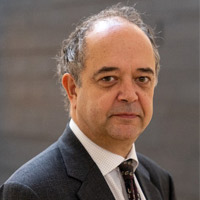
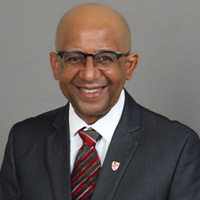


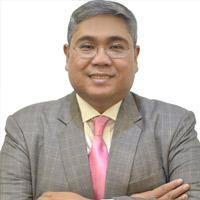


























| Stream A | Stream B | Stream C | Stream D | Stream E | |
| TBC | A10 Constitutions: evolution or circumscription? |
B10 Pro bono legal services – Opportunities and challenges |
C10 Is mediation a separate profession? The role of lawyers as mediators. |
D10 Gender diversity in the legal profession - Has the glass ceiling been smashed? |
E10 Recruitment and retention in the profession: Analysis and solutions |
| 8.45 - 10.15 | Constitution building is a bit like dentistry: there’s never a good time for it; no one does it for fun; but it’s sometimes necessary and, when it’s done right, it prevents greater pain in the future. But does it? Whether it is ‘done right’ rather depends on who writes it. As soon as it is written, someone will want it to change it. It was once wittily said of the United Kingdom that 'they had no written constitution and did not appear to feel the lack. Their law was, or, appeared to more rigid minds, to be based entirely on what some judge has said about what some other judge had meant.’ But it is not funny really, as that has been the case for a thousand years and appears to have worked. Or, has it? Which is to be preferred? Written constitutions are notoriously difficult to change, and jurisdictions around the Commonwealth are grappling with this now. The session will canvass both the desirability of a written constitution, and the practical issues of change to effect real law reform. |
The centuries old tradition of the legal profession providing services to those whose need is not matched by their economic circumstances presents opportunities and challenges for the modern lawyer. There are calls to mandate the provision of pro bono as a condition of a right to practise law, whilst governments and corporate consumers of legal services increasingly use their buying power to reward lawyers who do pro bono work with their retainers.
Large firms have sophisticated pro bono programs, whilst sole practitioners (including advocates) and those who represent them struggle to find more efficient ways to bridge the gap between willing pro bono service providers and those who need them. The session will canvas each of these issues, and propose practical approaches to the challenges. 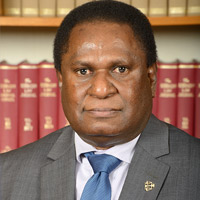
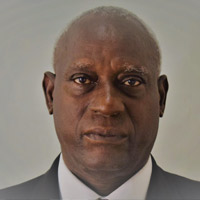
Chair His Hon the Chief Justice of Papua New Guinea Sir Gibuma Gibbs Salika GCL, KBE, CSM, OBE |
Should alternative dispute resolution be the preserve of lawyers only? What is the impact on the legal profession of non-lawyers engaging in mediation?. This panel will look at dispute resolution in commercial law, family law, and other areas of practice, and the impact that mediation is having on lawyers, law firms, and clients. | In 2023, when the ratio of gender diversity amongst law students in most Commonwealth jurisdictions has shifted in favour of females, what are the remaining barriers to equality of opportunity in our profession? | Most jurisdictions within the Commonwealth are experiencing a shortage of qualified lawyers, and professional associations and universities are struggling to find answers. What is even more concerning is the research showing that a significant proportion of young lawyers do not believe they will be working in the legal profession in five years - let alone in the same job. This session will explore strategies for recruitment and retention of young and recently admitted lawyers at a jurisdictional, and firm level. |
| 10.15 - 10.45 | Tea / Coffee Break | ||||
| 10.45 - 12.15 |
In partnership with
|
||||
| 12.15 - 1.15 | Closing Ceremony | ||||
| 14:00 -17:30 | Peace at the Crease Cricket Match Commonwealth 11 v Goa |
||||




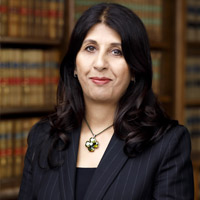





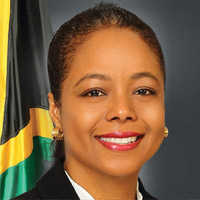
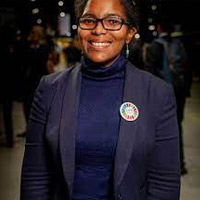
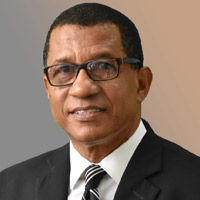
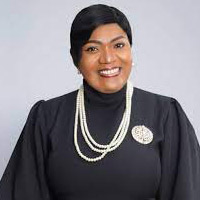
Tana’ania Small Davis, QCJamaica
Tana’ania is a graduate of the University of the West Indies and the Norman Manley Law School in Jamaica. She has over twenty five (25) years in practice having been admitted in Jamaica, British Virgin Islands, St. Kitts and Nevis, Antigua and Anguilla. Tana’ania main practice areas are Commercial Litigation, Insolvency and International and Domestic Arbitration. She has considerable experience in preparing and conducting complex multi-jurisdictional litigation and arbitration in the areas of shareholders’ disputes, breach of contracts, and asset tracing and recovery which often involves urgent interim relief by way of freezing orders, orders for disclosure of documents and information, search and seizure orders and injunctions.
Tana’ania is a Fellow of the Chartered Institute of Arbitration and a member of the Bar Associations of Jamaica, Antigua and Anguilla and the Commonwealth Lawyers Association and the Recovery and Insolvency Specialists Association (BVI) and the International Association of Restructuring, Insolvency & Bankruptcy Professionals (INSOL), the world-wide federation of national associations for accountants and lawyers who specialise in turnaround and insolvency.
She is a partner at Livingston, Alexander & Levy, Attorneys-at Law in Kingston Jamaica, the oldest law firm in the Commonwealth Caribbean.
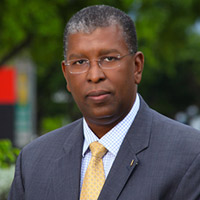
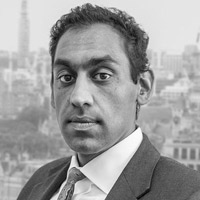
Donovan C. WalkerJamaica
Donovan Walker is a Partner of Hart Muirhead Fatta, Jamaica. Donovan is also a Notary Public and practices in the areas of corporate and commercial law, maritime law, conveyancing, financing and securities, mergers and acquisitions, international trade and investments, sports and entertainment law.
He served as the President of the Jamaican Bar Association and is a Member of its Commercial Law, Publications and Revenue Sub-Committees. Donovan is also a Vice-President of the Organisation of Commonwealth Caribbean Bar Associations (OCCBA). He presently serves as a member of the General Legal Council, Jamaica.
Donovan is the Executive Chairman of Subway (Jamaica) Limited and is a director of the Companies Office of Jamaica, the Maritime Authority of Jamaica and the Citizens Action for Free and Fair Elections. He is the Chairman of the Maritime Authority Pension Fund and served as a Commissioner of the Consumer Affairs Commission, Jamaica.
He is an active Rotarian and a Distinguished Past President of the Rotary Club of Saint Andrew.
Donovan read for a Bachelor of Laws at the University of the West Indies as well as a Master of Laws at University College London. He also studied at the Norman Manley Law School, where he presently serves as an Associate Tutor.
He is named as one of the leading commercial Attorneys-at-Law in Jamaica by Chambers Global as well as IFLR 1000.

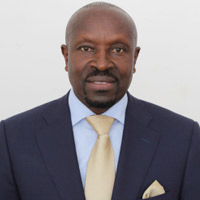
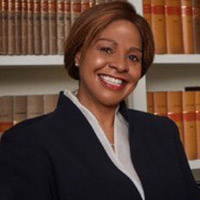
Lungisani Zulu Zambia
Mr. Lungisani Zulu is the President of the Law Association of Zambia and a Partner in the Commercial Law Firm of Equitas Legal Practitioners in charge of Banking, Finance and Fintech. He has previously served as Senior Legal Counsel of the Zambian Central Bank, Bank of Zambia, where his duties included providing legal guidance to the Central Bank in the formulation and implementation of the financial laws, policies, procedures and practices, litigation services before courts of law and arbitral tribunals among other key legal tasks. Before joining the Central Bank, he had been a lecturer at the University of Zambia teaching commercial law, investment law, land law and trade law as well as working as private practice legal practitioner with Tembo Ngulube & Associates.
Lungisani is an experienced Arbitrator and Member of the Chartered Institute of Arbitrators UK (MCIArb), Accredited Insolvency Practitioner, member of Listing Committee of the Lusaka Securities Exchange Plc, Notary Public and sits on the Lands Tribunal as member adjudicator.
He is also a Director on the Board of Institute of Directors Zambia championing good corporate governance in the country in addition to sitting on Boards of different commercial business entities. He holds a Master of Laws Degree (LLM) from Cornell University, New York and a Bachelor of Laws Degree (LLB) from the University of Zambia. He is an Advocate of all Superior Courts in Zambia with over 13 years professional experience.
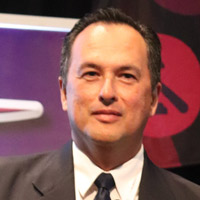
William Wylie ClarkeFiji
Wylie, as he prefers to be called, is a graduate in law of the Australian National University. He also has an honours degree in Government from the University of Sydney. He was admitted to the High Court of the Australian Capital Territory in 1995 and subsequently to the Fiji bar in 1996. He was a Prosecutor with the Director of Public Prosecutions Office from 1996 until 1998.
Wylie is a commercial lawyer in Fiji and has been Westpac Bank’s main legal advisor in Fiji for over 17 years. He is a former president of the Fiji-Australia Business Council and is a member of the Australian Institute of Company Directors’ Fiji advisory board.
Wylie’s areas of practice include finance, property and resort development, mergers and acquisitions, transaction negotiations and documentation as well as commercial litigation.
Wylie is a former President of the Fiji Red Cross National Society and is a current member of the Governing Board of the International Federation of the Red Cross and Red Crescent Movement, based in Geneva. He is also a founding and former member of the Compliance and Mediation Committee, a part of the International Federation established to assist it with governance matters and in taking any steps necessary to resolve potential breaches of integrity by National Societies and to resolve disputes; he served on that committee for 8 years.
An important and enduring focus of Wylie’s work has been in the area of governance and compliance. A key role he has fulfilled for more than 10 years has been to advise the International Federation of the Red Cross on matters pertaining to actual and potential breaches of integrity. He has also worked with domestic national societies to assist them with building and ensuring the continuity of governance structures and he has also help assist in ensuring their elections are conducted in accordance with their rules.
Wylie was elected President of the Fiji Law Society in September 2020 and appointed to the LAWASIA Exco in 2021. In 2022 Wylie was co-opted as Council Member of the Commonwealth Lawyers Association.
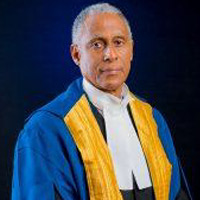
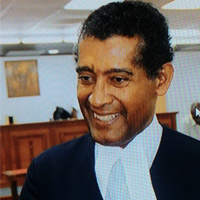
The Hon Mr Justice Adrian Saunders
The Honourable Mr. Justice Adrian Saunders,
President of the Caribbean Court of Justice
The Honourable Mr. Justice Adrian Dudley Saunders, a native of St. Vincent and the Grenadines, holds a Bachelor of Laws degree from the University of the West Indies (Cave Hill) in 1975 and a Legal Education Certificate from the Hugh Wooding Law School in Trinidad & Tobago in 1977. He began his legal career as a barrister and solicitor in private practice in his home country. In 1990, he established the firm of Saunders & Huggins before being invited to join the Eastern Caribbean Supreme Court (ECSC) High Court Bench in 1996. On May 1st 2003, Mr. Justice Saunders was appointed to the ECSC’s Court of Appeal and served as acting Chief Justice between 2004 and 2005.
While at the ECSC, Mr. Justice Saunders developed a passion for and was deeply involved in various judicial reform efforts. These included the introduction of court-connected mediation in the Eastern Caribbean and the development of that Court’s first Judicial Code of Ethics. He also served as Chairman of the ECSC’s Judicial Education Institute from 2001 to 2004. His work in judicial education has continued with the Commonwealth Judicial Education Institute (CJEI). He earned a Fellowship of the CJEI in 1998 and, for several years was the Course Director of The CJEI’s Intensive Study Programme. He is also one of the Institute’s Directors.
In 2005, Mr. Justice Saunders was among the first cohort of judges to join the Caribbean Court of Justice (CCJ) bench. Mr. Justice Saunders has contributed greatly to regional judicial outreach and judicial education efforts. He is a founding member of the Caribbean Association of Judicial Officers (CAJO) and has served as the organization’s Chairman since its inception in 2009. Due to his active engagement in advancing judicial integrity, Mr. Justice Saunders serves on the Advisory Board of the Global Judicial Integrity Network by the United Nations Office on Drugs and Crime’s (UNODC) Global Programme for the Implementation of the Doha Declaration.
Mr. Justice Saunders’ interests also extend to the area of court administration where he has adopted an active role in the CCJ’s public education and other strategy development projects. He led the development of the Court’s first Strategic Plan in 2012 and chaired the project to develop the Strategic Plan for 2018-2023 and continues to be involved in its on-going execution.
Mr. Justice Saunders has written many legal articles and publications and is a Consulting Editor of The Caribbean Civil Court Practice and a co-author of Fundamentals of Caribbean Constitutional Law. From 2009 – 2019 he served as Chairman of the Caribbean Association of Judicial Officers which, in collaboration with UN Women, played a leading role in developing and promoting the adoption of Gender Sensitive Protocols for Judicial Officers for various Caribbean judiciaries. He also lectured part time at the UWI, St Augustine Faculty of Law on Constitutional Law.
At its 29th Intersessional Meeting in Port au Prince, Haiti, in February 2018, the Caribbean Community Heads of Government agreed to the recommendation of the Regional and Judicial Legal Services Commission (RJLSC) that the Honourable Mr. Justice Adrian Saunders be appointed President of the Caribbean Court of Justice. He assumed the office of President on July 4, 2018.
The Honourable Mr Justice Saunders is married to Marilyn née Joslyn and the couple has two sons, Yuri and Yanek.

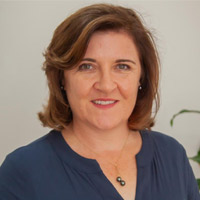
Barbara MurchieCanada
Ms. Murchie has over 35 years’ experience in conducting civil and Intellectual Property litigation at all levels of the courts in Canada. Her focus has been professional negligence, construction, municipal liability, and pharmaceutical litigation. She is a regular contributor to numerous skills-training and advocacy and ethics-related CPD programs. Ms. Murchie has served as a mentor for many young lawyers over the course of her career. In the community, she has been acting on various charitable boards.
Ms. Murchie is a bencher at the Law Society and an adjudicator at the Law Society Tribunal where she is vice-chair of the Appeal Division. Over the last 10 years and continuing, she has adjudicated many cases in which there are allegations of professional misconduct. She also conducts good character hearings in licensing applications. Ms. Murchie is currently chair of the Professional Development and Competence committee at the Law Society of Ontario.

Bill Holohan SCIreland
Bill Holohan SC, Solicitor and Senior Partner of Holohan Lane LLP solicitors, Cork and Dublin is unique among Irish solicitors, a fact recognised by the September 2020 decision of the Irish Government to award him a Patent of Precedence as result of which he became one of the first group of solicitors in Ireland to become a Senior Counsel Solicitor.
The criteria for appointment as Senior Counsel under section 173 of the Legal Services Regulation Act 2015 require a legal practitioner in his or her practice as a legal practitioner, to have displayed-
- a degree of competence and a degree of probity appropriate to and consistent with the grant to him or her of a Patent,
- professional independence, and
- one or more of the following:
- a proven capacity for excellence in the practice of advocacy;
- a proven capacity for excellence in the practice of specialist litigation; or
- specialist knowledge of an area of law.
As a senior and experienced legal practitioner in professional practice for 40 years, and as the author of no less than nine legal text books in the areas of professional practice, commercial Law, Bankruptcy, Personal Insolvency and Insurance/Professional Negligence, Bill Holohan had no difficulty in satisfying all criteria.
Prior to his appointment as Senior Counsel Solicitor, in another historic precedence, he had also been appointed in 2000 by the Chief Justice of Ireland as a Notary Public for both Cork & Dublin, notaries normally being appointed for single jurisdictions only. He is also an Irish and EU Trade Mark Practitioner and Intellectual Property Attorney.
Over his career he has been awarded multiple awards including the Irish Franchise Association Award for Franchise Person of the Year (2007), (the only service professional ever so honoured by the franchise industry in Ireland), the Irish Law Awards award for Alternative Dispute Resolution Practitioner of the year (2013) as well as his firm having been awarded the Irish Law Awards award for Best Law Firm of the year (2017) as well as a host of other legal services industry awards. In October 2021 he was awarded the Award for Irish Lawyer of the year by the Irish Law Awards. In March 2022, the Cork Business Association gave him a Lifetime Achievement Award, in recognition of his contribution to legal and business life.
He has also, in addition to many other roles, served as:
- Secretary, later Treasurer and finally as Chairman of the Chartered Institute of Arbitrators,
- Director & Council member of the Mediators Institute of Ireland,
- Founder member and Council member of the Irish Society of Insolvency Practitioners,
and currently serves as:
- Council Member of the Law Society of Ireland,
- Chair of the Law Society of Professional Indemnity Insurance Committee,
- Member of the Law Society Alternative Dispute Resolution Committee,
- Member of the Charity Appeals Tribunal, (Ministerial appointment – two terms),
- Member of the Complaints Adjudication Panel for Personal Insolvency Practitioners (Ministerial Appointment – two terms).
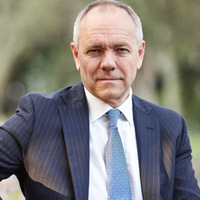
Ben Slade
Ben is a barrister at William Forster Chambers in Darwin, Australia. He was called to the bar in 2022 after 21 years as Managing Principal of the NSW practice of Maurice Blackburn, a national plaintiff and union law firm. Ben specialises in consumer, human rights, mass tort and commercial class actions and individual claims. Ben’s first 10 years as a lawyer were at Sydney’s Redfern Legal Centre where he learnt to identify and address mass wrongs for prisoners and consumers of credit. He was Manager, General Law at Legal Aid NSW for 6 years before joining Maurice Blackburn in 2000.
Ben is a Fellow of the Australian Academy of Law, the Chair of the Law Council of Australia’s Australian Consumer Law Committee and co-Chair of its Class Actions Committee. Ben has held board positions of the Australian Consumer’s Association, CHOICE, the Public Interest Advocacy Centre, the Consumer Credit Legal Centre, the Specialist Accreditation Board (NSW) and the Law Society of NSW.